
Clever Bedroom Storage Solutions for UK Homes
Practical bedroom storage ideas to help you make better use of the space you already have.
Most wardrobes feel full because of layout, not size — the lower rail zone, the top shelf, the door, and the wall beside the wardrobe are almost always wasted. Fix how the space is used before buying anything new.

Key Takeaways
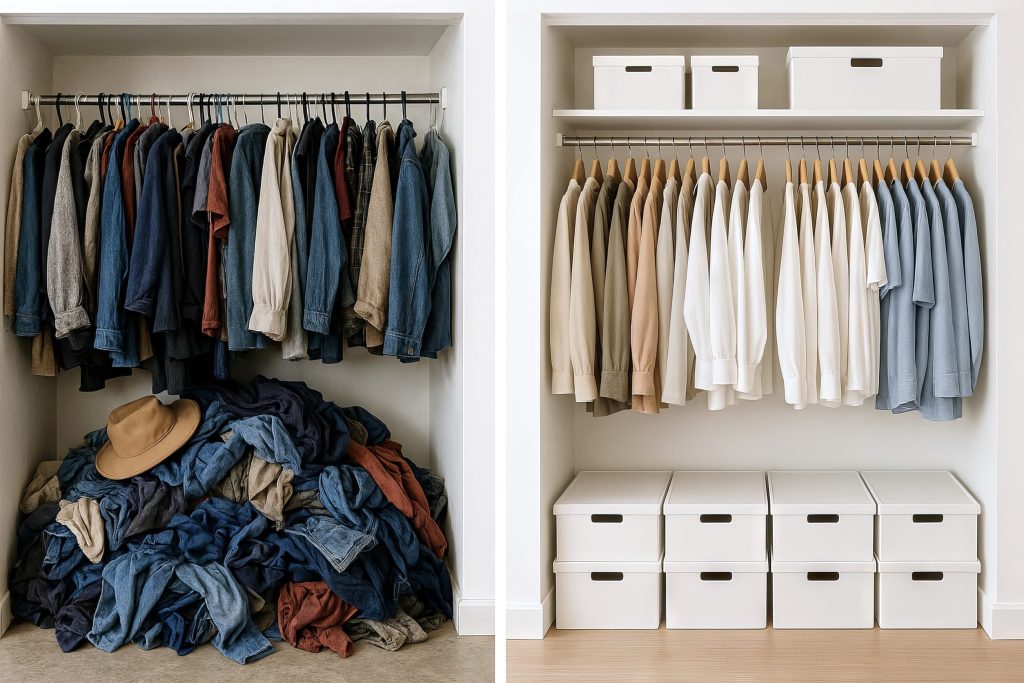
A wardrobe that feels constantly full usually isn’t too small — it’s just not laid out well. Most closets in real homes use only part of the available space, leave drawers disorganised, and ignore surfaces like the back of the door. With a few changes to how you store clothes, you can significantly increase what a standard wardrobe holds.
These clothes storage hacks focus on organisation that actually works. Not decorative tips — practical changes that give you more space in your own home, without buying a whole new wardrobe or moving to a larger house.
Space runs out for the same reasons in most wardrobes. The closet rail is full of mismatched hangers packed too tightly. Drawers are overfilled. Clothes pile up in folded stacks instead of being filed. That surface stays completely blank. The space below the hanging clothes sits empty.
A few habits that make clothes storage harder in most real homes:
It’s not usually a size problem. It’s a layout problem. And most of it is fixable without putting much money in.
Any clothes storage system works better once the rail and drawers have been edited first. Putting new drawers or hanging organisers into a cluttered space doesn’t solve the problem — it just makes the stuff harder to reach.
Go through everything in three passes:
The 33 closet rule comes from Project 333 — a challenge to keep only 33 pieces of clothing, including shoes, bags, and accessories, for 90 days. Everything else goes into boxes or gets donated.
Most people don’t follow it permanently, but the exercise is useful. It clarifies what you actually wear versus what clothing you store out of habit, and that clarity makes ongoing closet organisation significantly easier.
The 70/30 rule says keep your wardrobe no more than 70% full, with 30% empty. A closet packed to 100% is harder to use, harder to keep tidy, and causes clothes to crease because there isn’t enough room to hang them properly.
If the wardrobe is currently at capacity, the aim isn’t just to organise more cleverly — it’s to move some clothes storage out entirely, whether under the bed, into a dresser elsewhere in the room, or into a self-storage unit.
These are the changes that make a measurable difference to how much your storage holds.
A second rod below the main rail can double your hanging capacity for shorter items. The lower half of a wardrobe — everything below where shirts and jackets hang — is usually just empty floor. A second rod installed at the right height creates a full second layer of hanging space.
Adjustable extenders clip directly onto an existing hanging rod. No drilling, no tools — just clip it on and hang clothes from it. Items like shirts, folded trousers, and lighter jackets all fit on a second rod without any issue.
It’s one of the simplest, most space saving changes you can make to a standard wardrobe, and it costs very little.
Slim velvet hangers make a big difference to how much a closet rail holds. Swapping out bulky plastic hangers for slim ones is one of the most space saving changes you can make for under £20. Using matching hangers throughout keeps the rail visually clear.
Standard plastic hangers are often 5–6cm wide. Slim velvet versions sit at around 1cm. On a standard 90cm rail, that difference creates room for roughly 50% more clothes on the same bar. If you’re picking them up rather than buying new, matching hangers from thrift stores cost almost nothing.
Keeping hangers facing the same direction makes everything look tidier and makes scanning for what you want faster.
Space-saving hangers hold multiple items on a single hook. Multi-tier trouser hangers keep five or six pairs in the space one would normally take. Cascade clip hangers do the same for jackets and shirts.
A low-cost version: slide shower-curtain rings onto a single hanger, then hang camisoles, tank tops, or scarves from each ring. A few rings on one hanger keeps items visible and tidy without using extra closet rod space.
These are especially handy for tight spaces where every centimetre of hanging space matters.
Hanging organisers — fabric shelf units that hook over the closet rail — turn vertical space into stacked clothes storage. They’re one of the most practical additions for any closet that lacks enough drawer space.
A six-shelf hanging organiser uses about 30cm of rail space but provides stacked sections for folded clothes, shoes, and bags. Where drawer space is limited, hanging organisers do a lot of the work a dresser would otherwise handle.
They’re handy for items like tops, underwear, and folded garments you want visible without opening drawers.
Rarely used items work best on the top shelf: compression bags of seasonal items, spare bedding, large spare items. Keep everyday clothes off it — reaching up should be occasional, not part of the daily routine.
Stackable storage boxes keep the shelf tidy, protect contents from dust, and let you store more by stacking upward. That creates vertical storage above the main hanging area without taking up any floor space.
Vacuum bags used up there compress thick items like duvets and winter jumpers to a fraction of their usual volume, creating room for another layer of boxes alongside them.
Floating shelves on the wall beside or above a wardrobe add clothes storage without touching the main unit itself. A few wood shelves at the right height hold folded jumpers, shoes, or boxes that don’t fit in the wardrobe.
A single open shelf is particularly useful in a small bedroom where the wardrobe has no room to grow. A single shelf at eye level near the door keeps things you reach for daily — a bag, folded clothes, a pair of shoes — accessible without opening it.
Installing small adhesive hooks or a pegboard on the interior side wall of a wardrobe organises handbags, jewellery, hats, and belts without using hanging space or filling up drawers. It’s a quick fix for a surface that’s usually left completely blank.
Hooks on the wall beside the wardrobe do the same for daily-use items. A bag you grab every morning, a jacket you put on most evenings — hang these on wall hooks rather than putting them inside and taking up space.
Over-the-door hooks on the back of the wardrobe are one of the most overlooked space saving tools. They’re handy for tomorrow’s outfit — hang a belt, a bag, or anything you’d otherwise drape over a chair rather than push into a full drawer.
If you have a large collection of seasonal clothes, bulky furniture, or sports equipment that doesn’t fit into your home’s wardrobe, a self-storage unit is worth considering. WhatStorage helps you compare local facilities by size and price — a small unit can free your house’s wardrobe and bedroom without getting rid of anything permanently.
A small storage space is a different story to a roomy walk-in closet. In an ideal home every centimetre gets used — in reality, poor layouts waste a lot of it.
A few priorities for this kind of closet organization and storage:
Tank tops, everyday tops, and other lighter items are often the biggest source of closet clutter because there are a lot of them, and they don’t need to hang. Putting them on hangers wastes rail space that could hold coats or dresses.
Store these folded in drawers or on hanging organiser shelves instead — don’t hang them. File-fold them vertically so you can see every item at a glance without digging. You can hang just one or two out-of-rotation pieces on the rail if needed, but hang only what genuinely needs it. The same drawers hold significantly more when folded clothes stand upright rather than when stacked flat.
READ: Tips on How To Make More Space in Your Small Flat
Drawers are often the most disorganised section of a wardrobe. Without structure, clothes collapse, smaller items mix together, and drawers become difficult to use — which pushes more clothes onto shelves and rails, creating real clutter in the room.
File the clothes in every drawer. Standing clothes vertically in drawers — like files in a filing cabinet — makes every item visible at once. It works for tops, trousers, underwear, and any folded garments that go in drawers. It’s one of the most effective closet organisation habits for saving space in your existing drawers without buying anything.
Use shelf dividers and drawer dividers. Shelf dividers keep folded clothes in drawers from collapsing sideways. Drawer dividers create clear sections for underwear, socks, and other items, keeping drawers tidy without effort.
Assign categories to drawers clearly. One drawer for underwear and socks. One for t-shirts and folded shirts. One for jumpers. Mixing clothes of different types into the same drawers means every section deteriorates quickly.
Don’t overfill. Overfilled drawers are hard to close, hard to keep tidy, and end up with clothes spilling out when you open them. Putting too much into each drawer defeats the purpose of creating organised drawers in the first place. Leave enough room and the drawer stays organised on its own.
Use corner drawer space deliberately. A corner section of a dresser or wardrobe is often awkward for storing clothes. Smaller boxes or dividers inside corner sections work well for belts, jewellery, or smaller items you’d otherwise lose.
A handful of habits consistently reduce how much fits inside a wardrobe and how well the whole system works.
Hanging everything. Knitwear, light shirts, and everyday tops all store better folded in drawers. Hanging knitwear distorts garment shape over time and wastes rail space. T-shirts and everyday tops fold in seconds, stay in better shape, and store better in drawers.
Leaving the back panel blank. The back of any hinged wardrobe door is the most overlooked surface in an ideal home. Simple hooks or a small organiser turn it into useful storage space immediately. A hanging shoe organiser, hooks, or a small organiser adds meaningful storage without touching the drawers or shelves inside.
Putting bags on the floor. Bags take up more floor space than they look like they will when you’re putting them there. Hang them on hooks inside the wardrobe instead, or place them on a high shelf, and the floor stays clear. You can also hang bags from the back of the door using over-the-door hooks.
Buying storage products before decluttering. Drawers, boxes, and dividers bought for a cluttered closet add to the problem. Declutter and clear the clutter first, then decide what clothes storage tools the space actually needs.
Not using the space under the bed. The area under the bed is one of the most useful storage spaces in a bedroom, and most people leave it empty or fill it with stuff they’ve forgotten about. Flat storage boxes and vacuum bags of seasonal clothes both fit there easily, creating real extra capacity without touching the main closet at all.
Some of these take under an hour and cost almost nothing.
The main purchases — slim hangers, a shoe organiser, shelf brackets, and over-the-door hooks — come to well under £30 combined.
Start by decluttering and storing seasonal clothes under the bed in compression bags or in a self-storage unit. Then use vertical space more deliberately: add a second rod, put stackable storage boxes on the high shelf, and install hanging organisers inside the wardrobe. Switch to slim velvet hangers, file-fold clothes in drawers with dividers, and put a shoe organiser on the door. These steps together create the most space-saving impact.
Yes. An over-the-door shoe organiser stores accessories, socks, underwear, folded scarves, and toiletries just as well as shoes. Inside a wardrobe, one of these organisers keeps everything visible and tidy without using shelf space or filling up drawers.
The main reason wardrobes get cluttered again is that things don’t have a fixed place. Assign every category of clothes a specific drawer, shelf section, or part of the rail — and put things back there. A quick five-minute tidy once a week is easier than a full sort every few months. The 70/30 rule helps too: if the wardrobe is only 70% full, there’s always room to put things back properly without forcing it.
Vacuum bags are safe for most clothes — jumpers, coats, bedding, duvets, and seasonal items all compress well without damage. Avoid using them for anything delicate that needs to keep its shape, like tailored jackets or garments with structured shoulders. Natural fibres like wool and cotton can handle compression for a season, but check them when you take them out and allow them to air before wearing.
A basic sort and reorganise — decluttering, switching hangers, and file-folding the drawers — takes two to four hours for most wardrobes. Adding a second rod or installing floating shelves adds another hour. The longest part is always the declutter, not the organising itself. Breaking it into two sessions (declutter one day, set up the new system the next) makes it feel less overwhelming.
The cheapest improvements are the ones that cost nothing: file-folding clothes in drawers, grouping hanging items by length, and clearing the top shelf of things you never reach for. After that, slim velvet hangers (around £10–15 for a full set) and an over-the-door shoe organiser (around £8–12) are the two purchases that make the biggest difference for the least money.



Get the Best Quotes on Your Move Today!
Get quotes quickly and easily from a removal company near you
Michaela Pinga is a content manager and writer specialising in self storage and moving across the UK. With a background in both digital marketing and filmmaking, she brings a uniqe, clear, and...